


Circuit limits, or price bands, are safeguards that exchanges set to prevent large price movements in instruments within very short timeframes. When an instrument's price hits the upper or lower circuit limit set by the exchange, your orders will remain pending at that circuit price for that particular stock, ETF, or contract (EQ, FNO, CDS, or MCX).
How price bands work
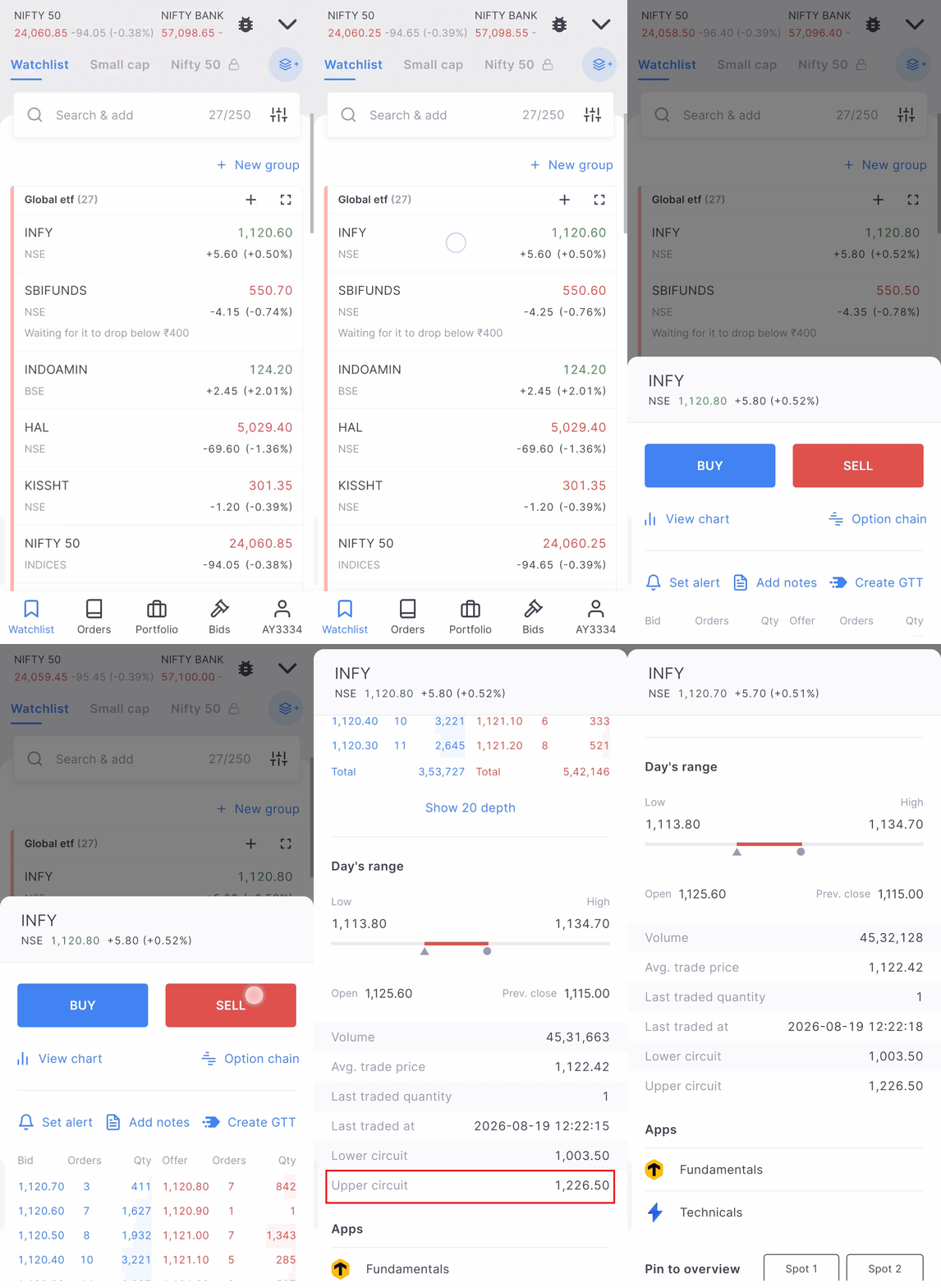
The price band determines the price range within which you can trade a stock for that day. Circuit limits range from 2% to 20%, depending on the liquidity, volume, and category of stocks. You can find the upper and lower circuit limits for any instrument in the market depth on Kite.
On Kite app
- Tap on the instrument.
- Scroll up.
On Kite Web
- Hover over an instrument in the watchlist and click on the Market Depth icon
- Alternatively, use the up and down arrow keys to select the instrument and press D on the keyboard

Impact on your orders
Your orders placed outside the price band will be rejected. If the price reaches the upper or lower price band, your orders will remain pending until the exchange relaxes the limits.
To understand what happens when MIS positions and circuit limits are hit, see What will happen to my intraday (MIS/CO) position in case the stock circuit limits are hit?
Equities with Futures & Options (F&O) contracts don't have fixed circuit limits for the day. Instead, they have a dynamic price band of 10%. The exchange maintains a fixed operating range of 10% on either side to ensure you trade within the specified range. When prices approach these levels, the exchange relaxes the limits further.
Currently, there is a cooling period of 15 minutes before new limits are added for F&O stocks.