


India VIX is a volatility index published by NSE. It measures the market's expectation of volatility in the Nifty 50 over the next 30 days, expressed as an annualised percentage. It does not indicate the direction of the market, only the expected size of price swings. A higher VIX suggests greater uncertainty; a lower VIX suggests a calmer market environment.
How is India VIX calculated?
India VIX is derived from the prices of Nifty options. When markets expect large moves, more is paid for options as a form of protection. This pushes option premiums up, which in turn pushes the VIX higher. When markets are calm, premiums fall, and the VIX moves lower.
The index uses a formula based on out-of-the-money Nifty call and put option prices to arrive at a single number representing expected volatility.
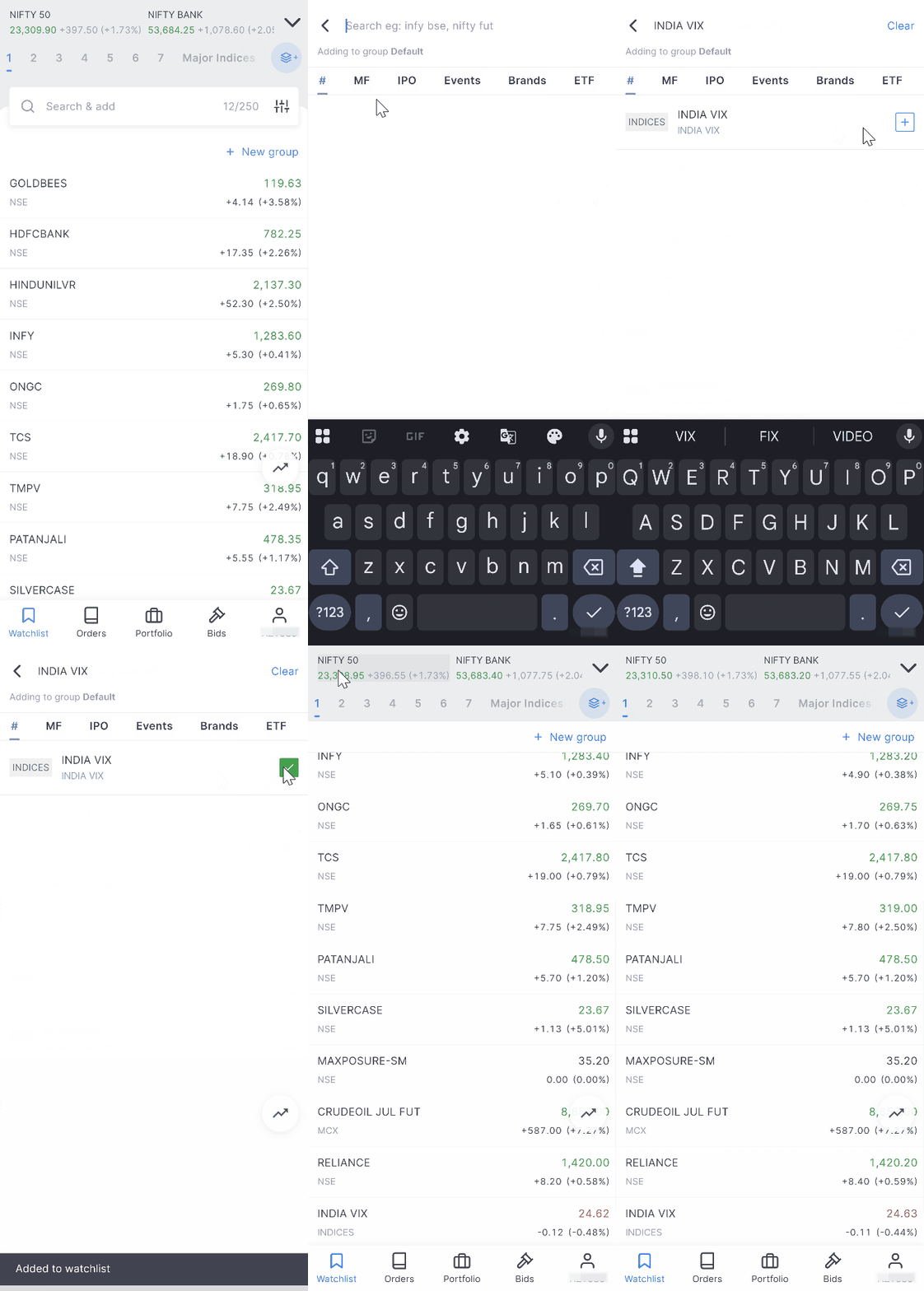
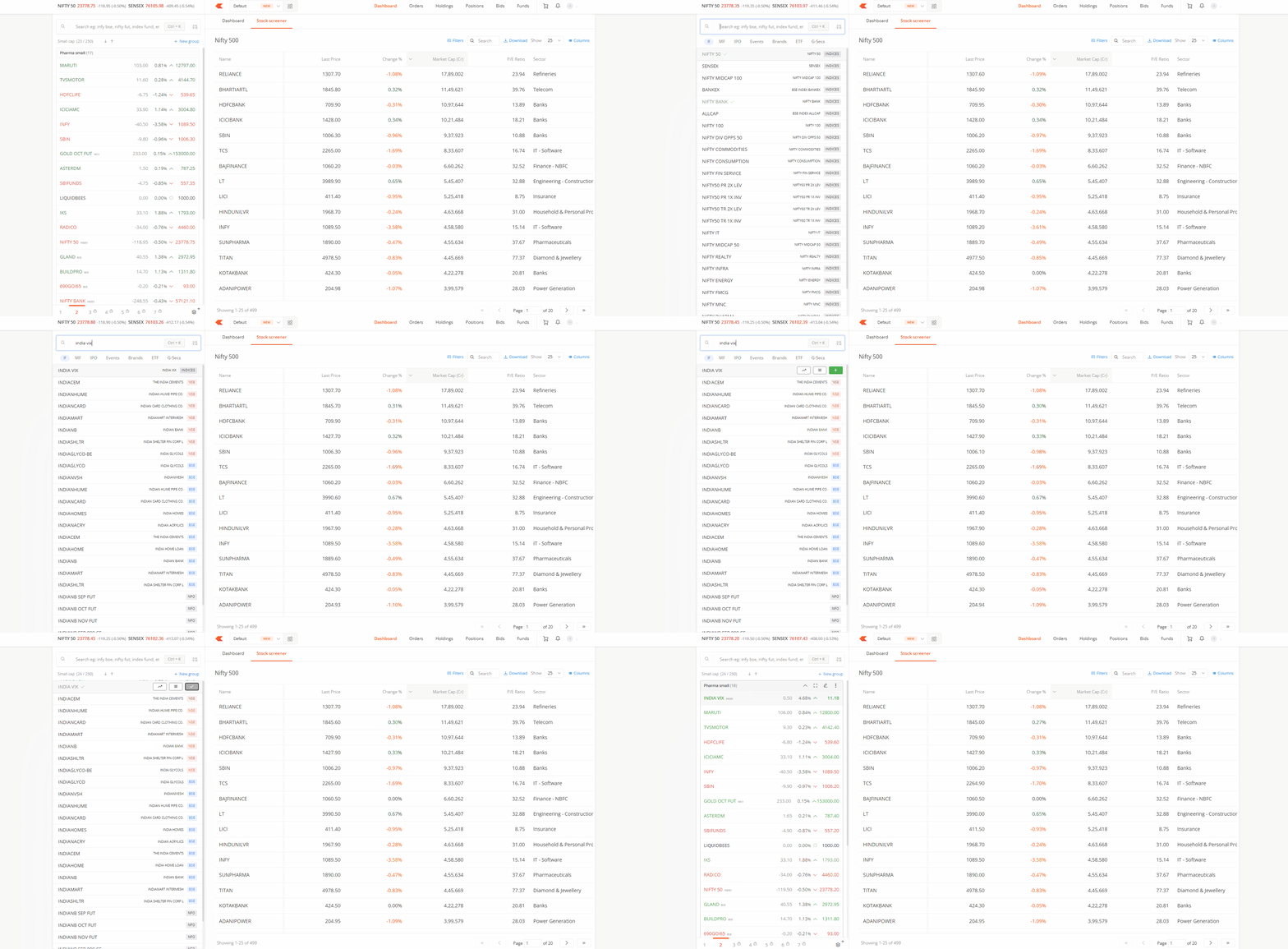
You can add India VIX to your watchlist on Kite by following these steps:
On Kite app
- Search for India VIX
-
Tap on +
On Kite web
- Search for India VIX
- Click on +
How to read the VIX number
India VIX represents annualised expected volatility. To estimate what this means over shorter periods, simple adjustments can be applied:
Expected monthly swing
Monthly volatility = Annual VIX divided by the square root of 12
For example, if India VIX is 15, the expected swing over the next 30 days is approximately 4.3% on either side of the current level.
Expected daily swing
Daily volatility = Annual VIX divided by the square root of 252 (the approximate number of trading days in a year)
For example, if India VIX is 15 and the Nifty is at 25,800, the expected daily movement is roughly 258 points in either direction.
These are estimates of the range of movement, not predictions of direction.
Why is India VIX tracked?
- Gauging market sentiment: VIX rises when uncertainty increases and falls when conditions stabilise. It functions as a real-time indicator of how nervous or relaxed the market is at any given point.
- Assessing the environment before acting: When VIX is elevated, price movements tend to be sharper and reactions faster. This can be a signal to review positions or to slow down new deployments. When VIX is low, daily movements are typically narrower and behaviour is more stable.
- Identifying potential entry points: VIX spikes at the index level tend to be short-lived. Once the triggering uncertainty clears, the VIX often cools and prices tend to stabilise. High-VIX periods can serve as gradual entry points rather than prompts to react to short-term noise.
Limitations of India VIX
- It can spike without warning: A single piece of news, such as a geopolitical development, an unexpected policy decision, or global market stress, can cause VIX to jump sharply within a single session. For example, India VIX rose nearly 49% in one trading day in April 2025 following global market stress, before retreating over the following weeks.
- It does not predict direction: A high VIX day can still end with the market moving up or down. VIX only indicates how wide the move might be, not which way it will go.
- Low VIX does not guarantee stability: Periods of low VIX can be followed by sharp corrections. A calm reading today does not rule out volatility in the near future.
- It works best alongside other tools: VIX is most useful when combined with fundamental analysis, technical indicators, and awareness of broader macroeconomic factors. Used in isolation, it gives an incomplete picture.