


Electricity futures are financial contracts that allow you to speculate on electricity prices or hedge against price volatility. Just like crude oil or gold futures, these contracts let you take a position on where electricity prices might go without actually buying or selling electricity. Each contract represents 50 megawatt-hours of electricity, and you can profit from both rising and falling prices by buying or selling these contracts.
For example, if you believe electricity prices will rise due to increased summer demand, you can buy electricity futures. If prices do increase, your contract becomes more valuable and you can sell it for a profit. On the other hand, if you think prices will fall, you can sell futures and profit if prices decline.
India introduced electricity futures trading for the first time on 10th July 2025. The Multi Commodity Exchange (MCX) launched on 10th July 2025, and the National Stock Exchange (NSE) will start on 14th July 2025. These contracts are cash-settled without any physical delivery.
Here are the key contract specifications:
| Feature | Detail |
|---|---|
| Trading unit | 50 MWh per contract |
| Price quotation | Indian Rupees per MWh (excluding taxes and levies) |
| Tick size | ₹1 per MWh |
| Trading hours | Monday to Friday, 9:00 AM to 11:30 PM (till 11:55 PM during US daylight saving time) |
| Expiry dates | Last business day before the end of each contract month |
| Settlement mechanism | Cash-settled based on the Volume Weighted Average of Unconstrained Market Clearing Price (UMCP) of the Day Ahead Market (DAM) at Indian Energy Exchange (IEX) |
| Daily price limits | 6% (extendable up to 9%) |
| Initial margin | Minimum 10% or volatility-based margin, whichever is higher |
| Client position limits | 3 lakh MWh or 5% of market-wide open interest, whichever is higher |
| Max order size | 2,500 MWh |
Power generators can use these contracts to fix the price at which they sell electricity, providing revenue certainty. Electricity distribution companies can avoid price shocks during peak demand months by buying futures to secure electricity in advance. Large industrial users like factories, steel plants, and data centres can fix their costs, while traders and investors can speculate or diversify their investments.
Exchanges have implemented safeguards including price limits, margin requirements, position limits, and order size limits to ensure fair trading.
How to trade electricity futures on Kite?
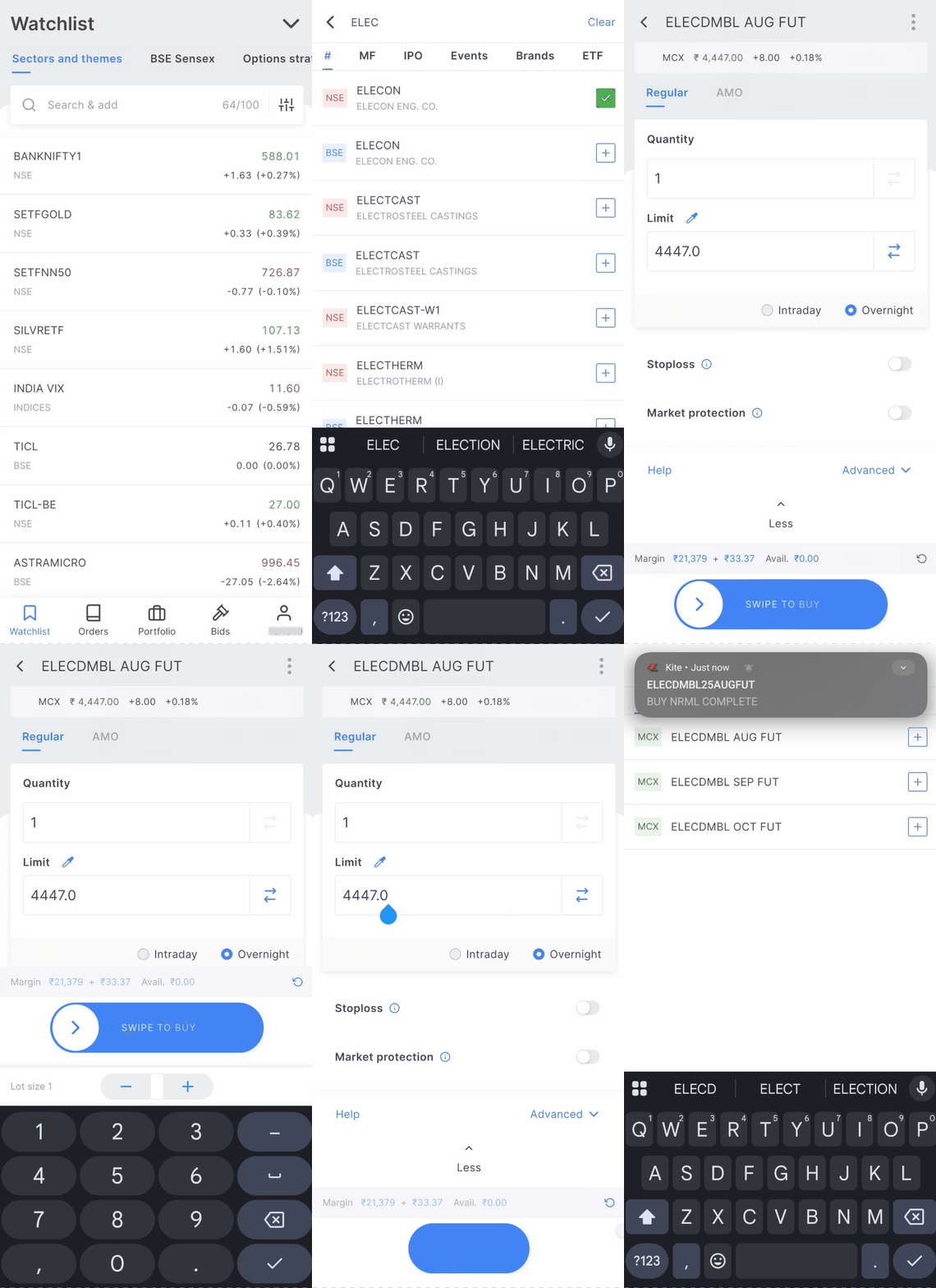
You can trade electricity futures on Kite using these steps:
Search for contracts:
- For MCX: Type elecdmbl fut in the search bar
-
For NSE: Type
elecmbl fut
in the search bar
Place your order:
- Search for the contract.
- Tap on the contract you want to trade.
- Tap on Buy or Sell depending on your position.
- Enter the quantity (number of contracts).
- Enter your desired price.
- Check the margin required for the trade.
- Ensure you have sufficient funds in your Zerodha account.
- Swipe to buy or sell to execute the trade.
Exchanges offer contracts for every month of the year, but only four remain open for trading at any given time: the current month and the next three months.