


1. What is a secondary demat account?
A secondary demat account is an additional demat account that you can open alongside your existing (primary) demat account through Zerodha Console . It works like a separate holding space where you can keep securities that you do not intend to sell or keep for a long time. It also helps with tax efficiency through better FIFO management.
2. Can I move shares between my primary and secondary accounts?
Yes, you can easily transfer shares between accounts online through Console. The buy average gets automatically updated within 3 working days for stocks transferred between primary and secondary demat accounts, so you don’t need to update it manually.
3. Will my secondary demat holdings appear on Kite?
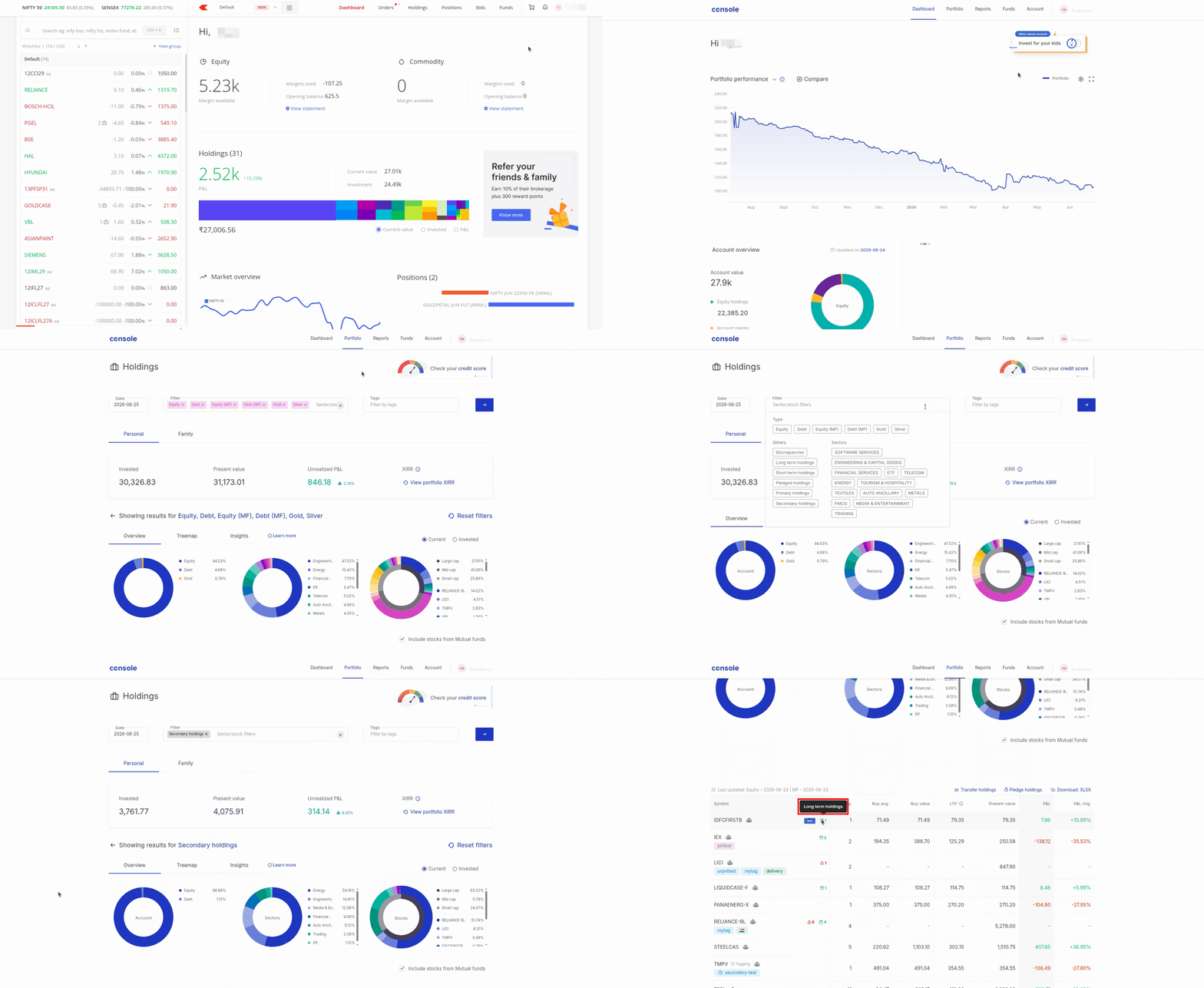
No, shares in your secondary account will not appear on Kite. You can view them only on Console. This helps maintain discipline by keeping long-term investments separately from your active trading interface.
4. Will secondary demat transfers appear in my Tax P&L report?
No, secondary demat transfers will not appear in your Tax P&L report since a secondary demat account only holds shares (no buying or selling happens there). When you transfer shares back to your primary account and sell them, those sale transactions will be included in your Tax P&L report.
5. What are the charges for a secondary demat account?
Account Maintenance Charges (AMC): ₹300 + 18% GST for each account separately
- ₹300 + 18% GST for your primary account
- ₹300 + 18% GST for your secondary account
Your account will not qualify as a BSDA (Basic Services Demat Account) as the criteria for BSDA require you to have only one demat account. For example, even if your primary account has holdings worth ₹20,000 and your secondary account has holdings worth ₹40,000 (both under the ₹4 lakh BSDA limit individually), you will still pay regular AMC charges for both accounts instead of the reduced BSDA charges.
Off-market transfer charges: ₹13 + 18% GST = ₹15.34 per ISIN for each transfer transaction between your primary and secondary demat accounts.
Example scenario: Let's say you transfer 100 shares of XYZ Ltd. and 50 shares of ABC Ltd. from your primary to your secondary demat account. Since two ISINs are being transferred, the charges will be ₹15.34 + ₹15.34 = ₹30.68, irrespective of the number of shares. If you later transfer both ISINs back to your primary account, the same charges will apply again. Charges are levied per ISIN per transfer transaction, regardless of the quantity or value of shares transferred.
6. Who can open a secondary demat account?
Only resident individual accounts can open a secondary demat account. You cannot open one if you have NRI accounts or non-individual accounts (joint, corporate, partnership, HUF, etc.).
7. Can I sell shares directly from my secondary account?
No, you cannot sell shares directly from your secondary account. To sell shares from your secondary account, you must first transfer them to your primary account, which takes 24 hours, then sell from Kite.
8. Can I convert my secondary demat account to a primary demat account?
No, it's not possible to convert a secondary demat account into a primary one, or vice versa.
However, moving shares between your accounts is straightforward. You can easily transfer shares between accounts online through Console. Console automatically updates buy averages within 48 hours and applies FIFO calculations when you make transfers.
9. What happens during corporate actions like bonuses and splits?
Corporate actions are processed in the same demat account where your shares are held. If your shares are in your primary demat account, the bonus shares or split shares will be credited to your primary account. If your shares are in your secondary account, the corporate actions will be processed in your secondary demat account.
10. What's the advantage of having a secondary demat account with Zerodha over having accounts with different brokers?
Having a secondary demat account with Zerodha has these advantages over using different brokers:
- Tax filing: All your trades are in one place, making it easy to file taxes with Zerodha's superior Tax P&L reports.
- Prevents panic selling: When markets crash, you might want to quickly sell your long-term investments out of fear. With different brokers, you can sell your investments instantly from each account. But with Zerodha's secondary account, you need to transfer shares first, which takes 24 hours. This waiting time helps you calm down and stick to your long-term plan.
- Easy management: You use one login for all accounts and see everything in one place, instead of managing multiple logins with different brokers.
11. Can I use shares in my secondary account as collateral for trading?
No, you cannot use shares in your secondary account as collateral for trading or pledge them for margins.
12. What is the TPIN for my secondary account?
Once your secondary account is activated, you will receive the TPIN via email. You can also generate the TPIN by entering the BO ID for your secondary account. TPIN will be different for your primary and secondary demat accounts.
13. Do transfers between primary and secondary accounts attract capital gains?
No, transferring shares between your primary and secondary demat accounts does not attract capital gains. These are considered off-market transfers and are not taxable events.
14. Can I transfer mutual funds between my primary and secondary demat accounts?
Currently, you cannot transfer mutual funds between accounts. This feature will be available soon.
15. Can I pledge holdings from my secondary demat account?
No, you cannot pledge holdings or lend securities through Securities Lending and Borrowing (SLB) from your secondary demat account. To do either of these, you will need to transfer the shares to your primary demat account first.
16. Will holdings in the secondary demat account be eligible for corporate actions such as buybacks, takeovers, and delistings?
Yes. Holdings in the secondary demat account are eligible for corporate actions such as buybacks, takeovers, and delistings.
However, if you wish to apply for these corporate actions through Console, you must transfer the shares from the secondary demat account to the primary demat account before the record date.
If you do not want to transfer the shares, you will need to update the beneficiary account details in the company's records by contacting the respective Registrar and Transfer Agent (RTA). This will allow you to participate in the corporate action using your secondary demat holdings.
17. Can I close my secondary demat account online?
Yes, a secondary demat account can be closed either
- Online by submitting an e-signed account closure form (PDF) through a support ticket. Sample copy (PDF).
- Offline by couriering the account closure form (PDF) to Zerodha's address. Sample copy (PDF).
18. Is AMC free for the first year on a secondary demat account?
AMC is free for the first year for all resident individual accounts opened on or after 1 June 2026. However, this waiver does not apply to a secondary demat account. If you open a secondary demat account, AMC charges of ₹300 + 18% GST will apply to it from day one, including the first year.